
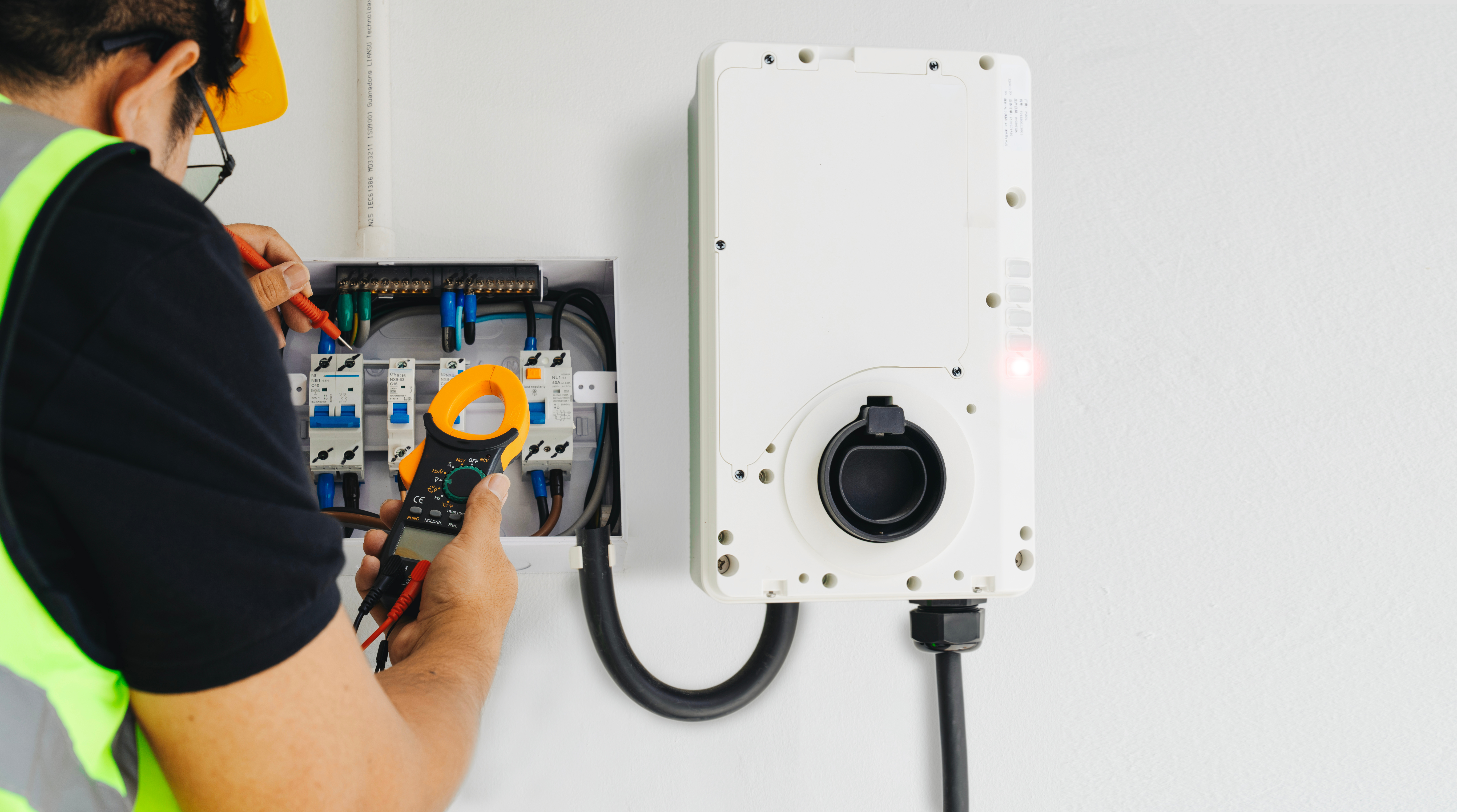
Installing an electric vehicle (EV) home charging station is one of the best upgrades you can make as an EV owner. It gives you the convenience of charging overnight, lower energy costs, and independence from public chargers. Whether you’re looking for a home EV installation or exploring commercial EV charging solutions for your business or property, this guide walks you through how to install an EV home charging station — from choosing the right equipment to completing a safe and compliant installation.
Step 1: Choose the Right EV Charger
Before you install anything, decide which type of charger fits your vehicle and driving habits. Most drivers choose a Level 2 charger, which offers 20–30 miles of range per hour of charge. Look for models that are UL-listed, compatible with your vehicle, and offer smart features like Wi-Fi connectivity and scheduling.
Consider these factors:
- Your EV’s maximum charge rate
- The charger’s amperage (32A–48A for most homes)
- Whether you want a plug-in or hardwired unit
- Space and mounting location (garage, driveway wall, or carport)
Step 2: Assess Your Electrical Panel
Check that your home’s electrical panel can handle the added load. A Level 2 charger usually requires a dedicated 240-volt circuit rated for at least 40 amps. If your panel is older or near capacity, an electrician may recommend an upgrade or subpanel installation. This step ensures your charger operates safely without tripping breakers or overloading circuits.
Step 3: Hire a Licensed Electrician
Even if you’re comfortable with DIY projects, EV charger installation is best left to a licensed electrician. They’ll ensure everything complies with local codes and the National Electrical Code (NEC). Professional installation includes pulling permits, installing the dedicated circuit, mounting the unit, and verifying proper grounding and GFCI protection.
If you’re located in Illinois, BeChargedEV’s Residential and Commercial Installation handles the entire process from inspection to activation, so you can start charging with confidence.
Step 4: Mount and Connect the Charger
Once your dedicated circuit is ready, the electrician will mount the charger on the wall and connect it to the power supply. For outdoor installations, weatherproof enclosures and conduit are used to protect wiring. The charger is then connected to your EV using either a fixed cable or a detachable plug, depending on your setup.
After installation, your electrician will test the system to ensure safe operation and confirm that your EV begins charging properly.
Step 5: Optimize Your Charging Routine
With your new charger installed, set up smart charging schedules to take advantage of off-peak electricity rates, usually between 11 PM and 6 AM. Many EVs and chargers allow you to automate charging start and stop times. Keeping your battery charged between 20–90% helps maintain long-term health while ensuring you always have the range you need.
Maintenance & Safety Tips
Once installed, your charging station requires very little maintenance. Keep cables coiled neatly to avoid strain, inspect connections for wear, and make sure the area stays dry and free of debris. If you notice any unusual heat or tripped breakers, contact your installer immediately.
Knowing how to install an EV home charging station gives you a clearer picture of what’s involved—from selecting the right charger to hiring the right professional. When installed properly, a home EV charger offers unmatched convenience, faster charging times, and lower costs than relying on public stations. If you’re ready to move forward, contact BeChargedEV today for a seamless installation handled by licensed experts. We’ll evaluate your setup, manage the permits, and get your home charger running quickly—so you can charge smart and drive electric with confidence.
